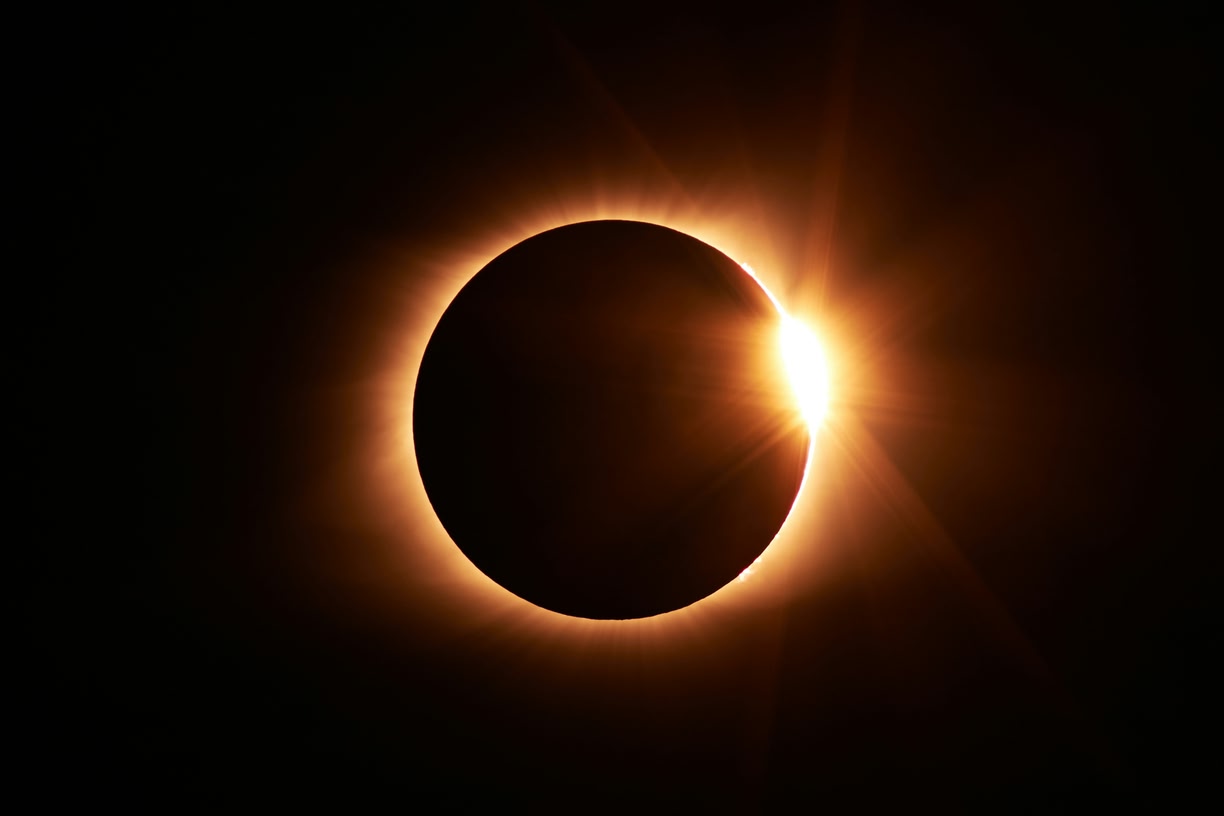
Residents and visitors across Pembrokeshire are in for a dramatic evening this Wednesday, 12 August, when the moon will pass across the face of the sun in the deepest partial solar eclipse visible from Britain since 1999.
Approximately 94% of the sun is expected to be covered when the eclipse reaches its peak above Pembrokeshire, placing the county among the best spots for viewing in all of Wales and second only to the far south-west of England for eclipse coverage across mainland Britain.
The eclipse window will open in the early evening, with first contact between the moon and sun expected at around 6.12pm. The phenomenon reaches its peak at roughly 7.13pm before the sun is gradually uncovered and the event draws to a close just after 8pm. The timing means the eclipsed sun will sit relatively low in the western sky, making the Pembrokeshire coastline — with its sweeping sea horizons — especially well suited for the occasion.
Strumble Head in north Pembrokeshire has been highlighted by astronomers as one of the top ten locations in the UK from which to watch the event. The headland's west-facing aspect puts the eclipsed sun directly above the Irish Sea, while the surrounding coastline's minimal light pollution also means that once the eclipse ends, skywatchers can turn their attention to another celestial event: the annual Perseid meteor shower, which peaks on the same night.
The eclipse is a partial one for Pembrokeshire because the path of totality — where the moon completely blocks the sun — cuts across a much narrower band stretching from Greenland and Iceland through northern Spain. The UK sits outside that corridor, but the coverage here will still be striking. The moon will be especially large in the sky owing to its proximity to Earth, which reached its closest point just two days earlier.
Anyone wishing to observe the eclipse is strongly advised to use certified solar-viewing glasses or an approved solar filter. Looking directly at the sun without proper protection, even with most of its light blocked, can cause permanent eye damage. Pinhole projectors offer a safe low-cost alternative.
For those who miss Wednesday's display, the next time the UK will see an eclipse of comparable depth is not expected until 2081, with a total solar eclipse over Britain not forecast until 2090. Pembrokeshire's wide open skies and accessible coastal headlands mean there is unlikely to be a better place in Wales to witness this once-in-a-generation event.



Join the conversation
No comments yet. Start the conversation.